
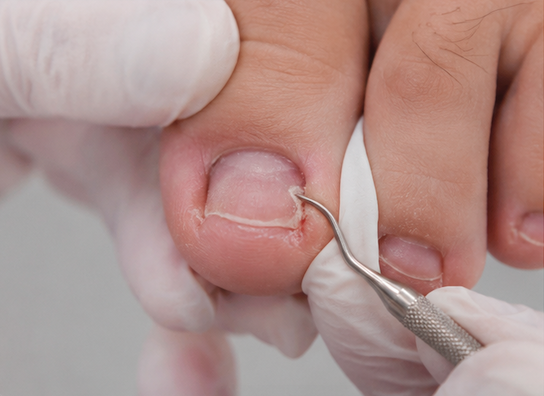
An ingrown toenail forms when the nail edge grows into the surrounding skin. Cutting too short, narrow shoes and some injuries are among the most common causes.
1. Useful first steps
Wear a wide shoe to reduce pressure. Wash the foot with clean water, dry thoroughly, then apply a local antiseptic if the skin is irritated. A short warm foot soak may ease comfort, but it does not replace professional care.
If pain is manageable and there is no clear infection, you can monitor for 24 to 48 hours. As soon as the area becomes very painful, warm, swollen or weeping, seek care without delay.
2. What not to do
Do not cut a “V” into the centre of the nail and do not try to pull out the ingrown fragment with scissors or tweezers. These actions often worsen inflammation and can cause infection. Also avoid non-sterile objects to “free” the nail edge.
In people with diabetes or on anticoagulant treatment, self-treatment is particularly discouraged: the risk of complication is higher.
3. Preventing recurrence
Cut nails straight across, without rounding the corners excessively, and leave a visible free edge. Choose wide toe-box shoes. If a nail already tends to become ingrown, regular professional toenail cutting helps control its shape.
When to see a medical pedicurist
Book an appointment as soon as pain affects walking, if redness spreads, or if the ingrown toenail returns several times. At the practice, ingrown toenail treatment involves freeing the affected edge with sterilised instruments, relieving pressure and reducing infection risk.
In some recurrent cases, medical referral may be needed for additional care.