
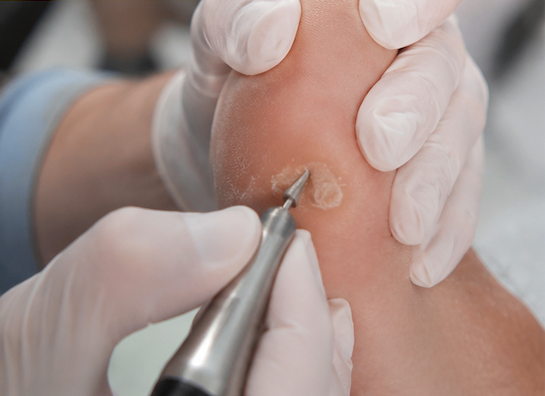
A callus is a diffuse thickening of the skin, often under the forefoot or on the heel. Less “pointed” than a corn, it can still make walking uncomfortable and may signal abnormal pressure or unsuitable footwear.
1. Callus or corn: what is the difference?
A callus spreads over a wider surface. A corn is more localised, often with a hard, painful core. Both come from repeated friction or pressure, but a corn usually needs more targeted removal.
To reduce corns, see also our advice on how to prevent foot corns.
2. Useful everyday steps
Moisturise dry areas regularly, wear suitable socks and choose shoes with enough space and proper cushioning. Alternating pairs can sometimes help redistribute pressure.
A gentle file may occasionally soften a superficial callus, without ever forcing down to raw skin. For people with diabetes, avoid aggressive rubbing at home.
3. What to avoid
Do not cut a callus with a blade, and be careful with corn-removing products from the pharmacy: they can burn healthy skin. Cutting too deep also raises the risk of infection.
When to see a medical pedicurist?
Seek care if the callus becomes painful, cracked, if it bleeds, or if it returns quickly in the same place. In the practice, treatment reduces the thickening with sterilised instruments, then addresses the cause (footwear, pressure, deformity).
If the area looks more like a corn, corn treatment may be more suitable.